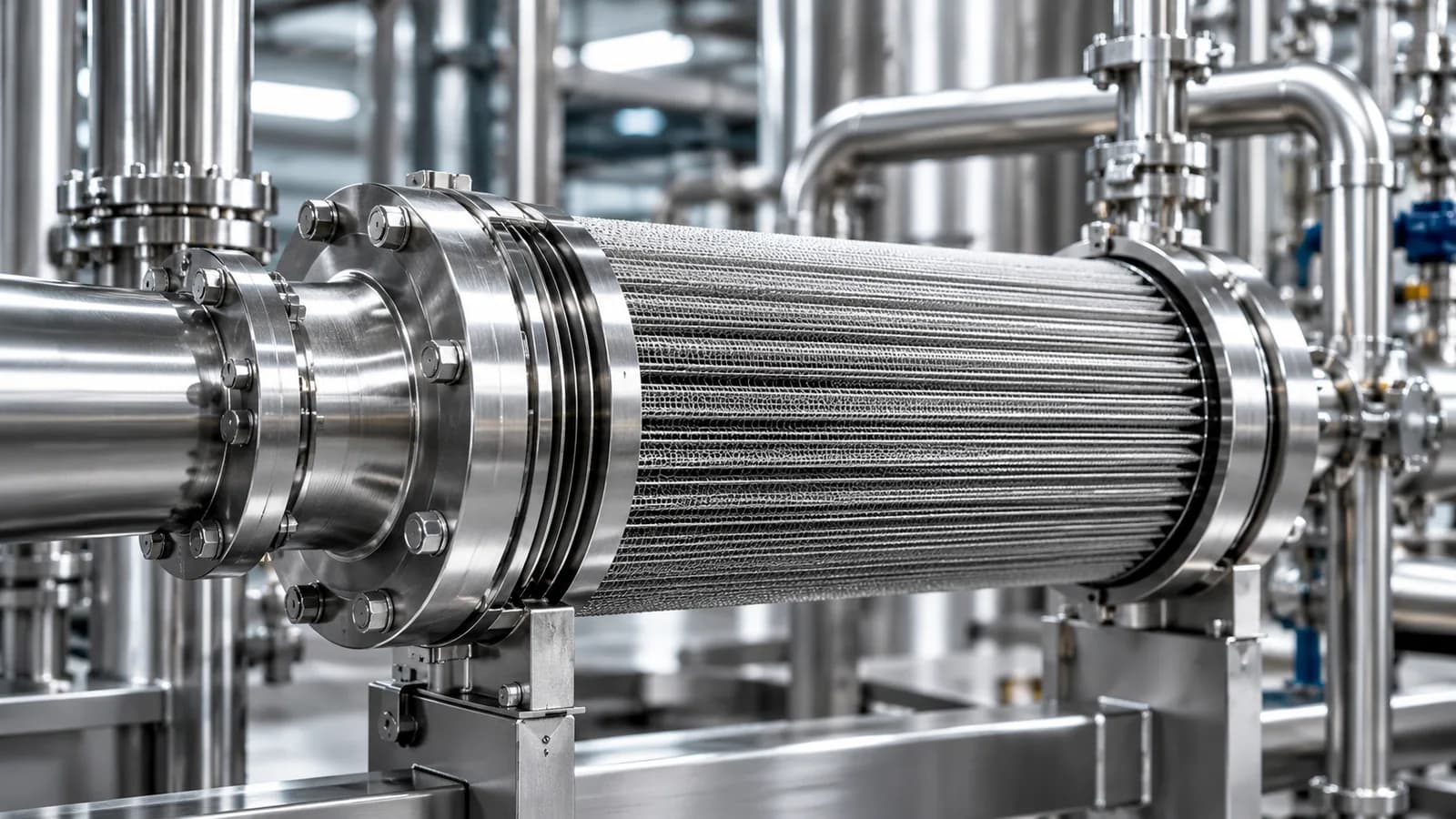
A filter that retains the right particles but starves the process of flow has failed. Pressure drop across the element is the number that links the mesh to the rest of the system: pump size, energy cost, cleaning interval and element life.
What drives pressure drop
- Open area. The fraction of the cloth that is open. More open area lowers resistance to flow.
- Wire diameter. For a fixed aperture, thicker wire reduces open area and raises resistance. Thicker wire does add strength.
- Aperture. Finer openings resist flow more, especially with viscous liquids.
- Flow velocity. Resistance rises with velocity, so sizing the filter area is as important as choosing the mesh.
- Fluid properties. Viscosity and temperature change how hard the fluid is to push through the same cloth.
- Fouling. As particles collect, pressure drop climbs. The clean pressure drop is only the starting point.
Strength versus flow
The designer is balancing two demands. A strong mesh needs enough wire to withstand the differential pressure and handling. A free-flowing mesh needs enough open area. Supporting layers, pleating and corrugation let a fine, thin cloth do the filtering while a coarser backing carries the load.
Ways to lower pressure drop without losing retention
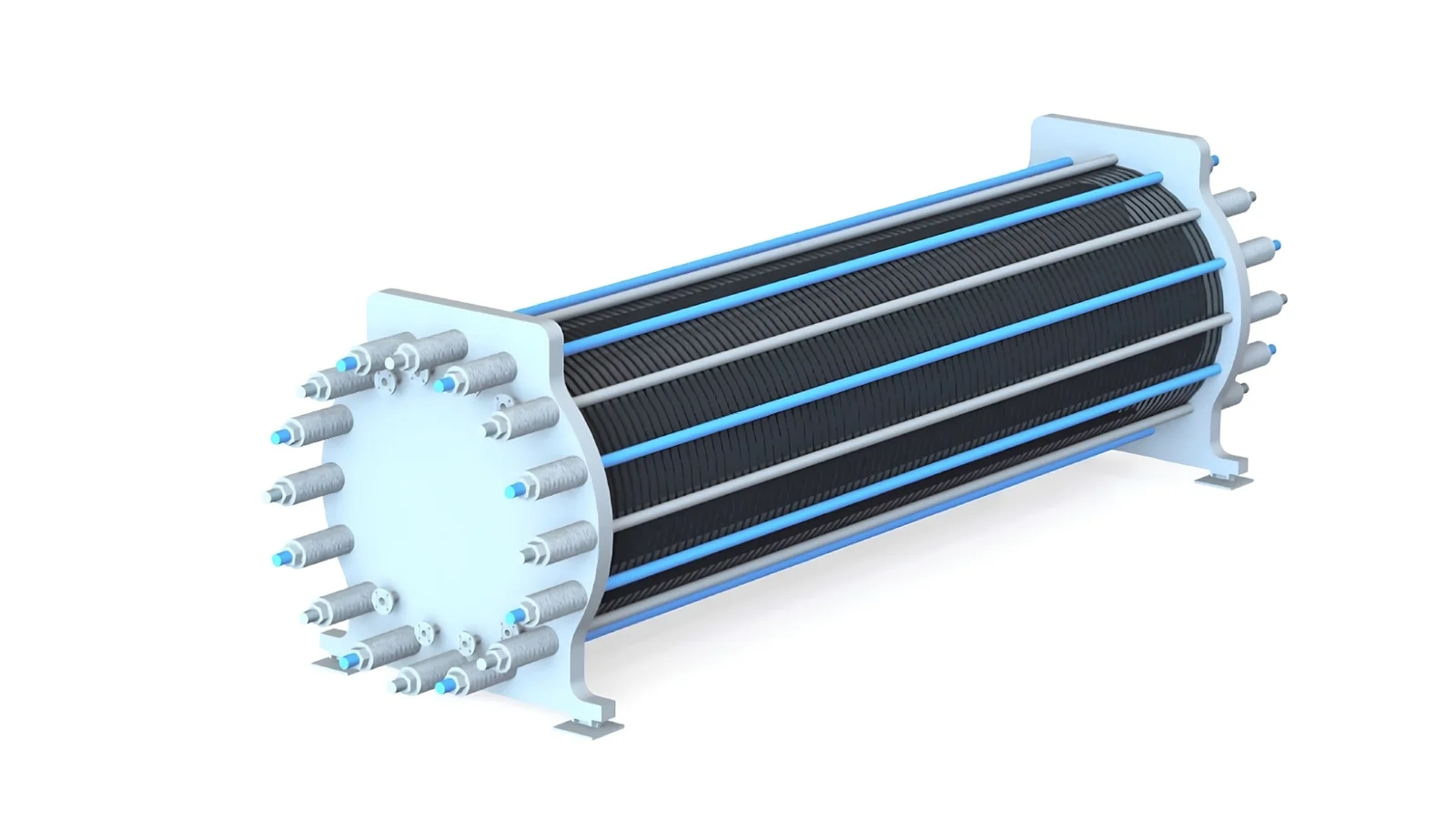
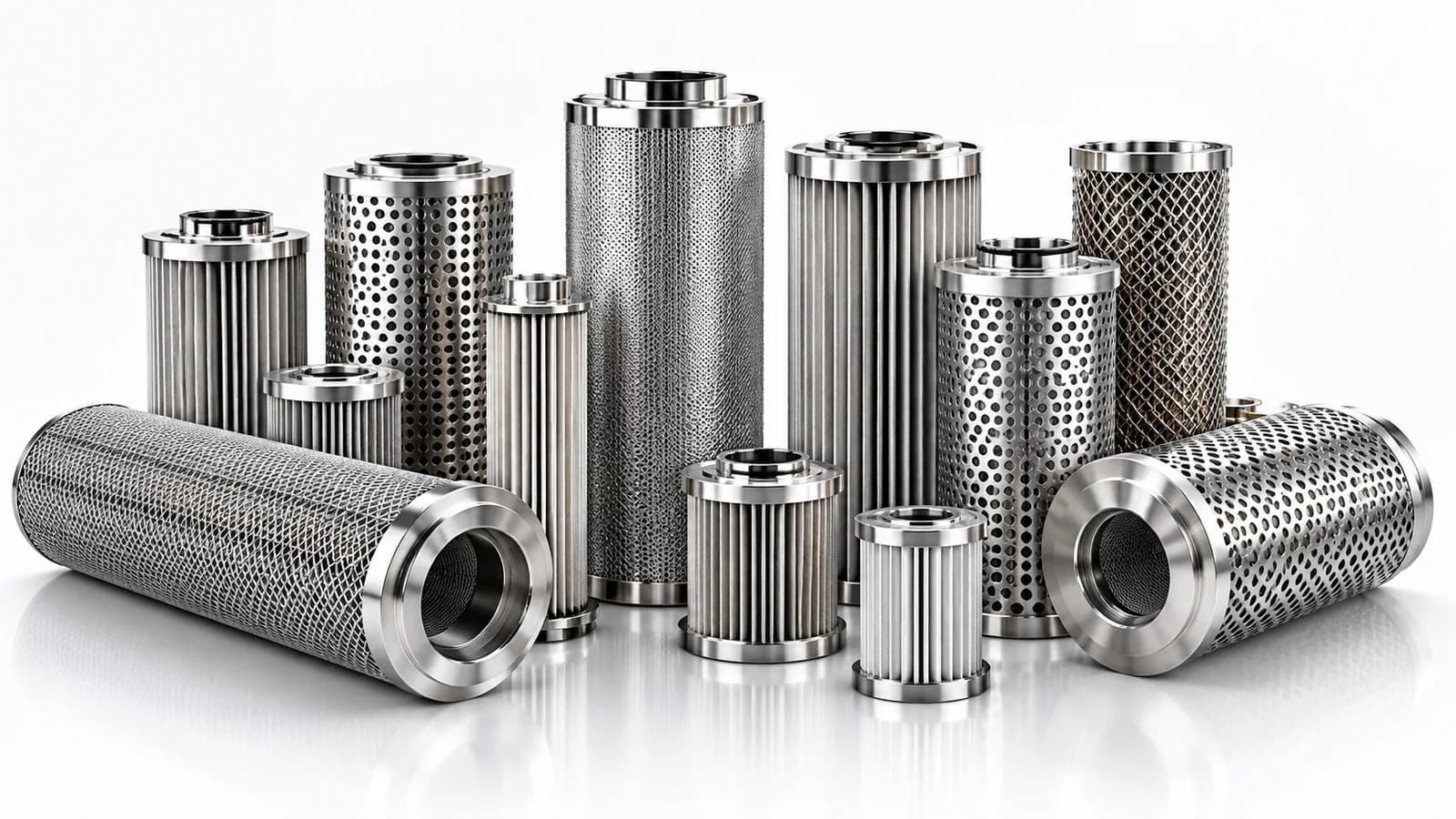
- Increase filter area through pleating, corrugation or a larger element, so the same flow moves more slowly through the cloth.
- Select the weave that gives the needed retention with the most open area.
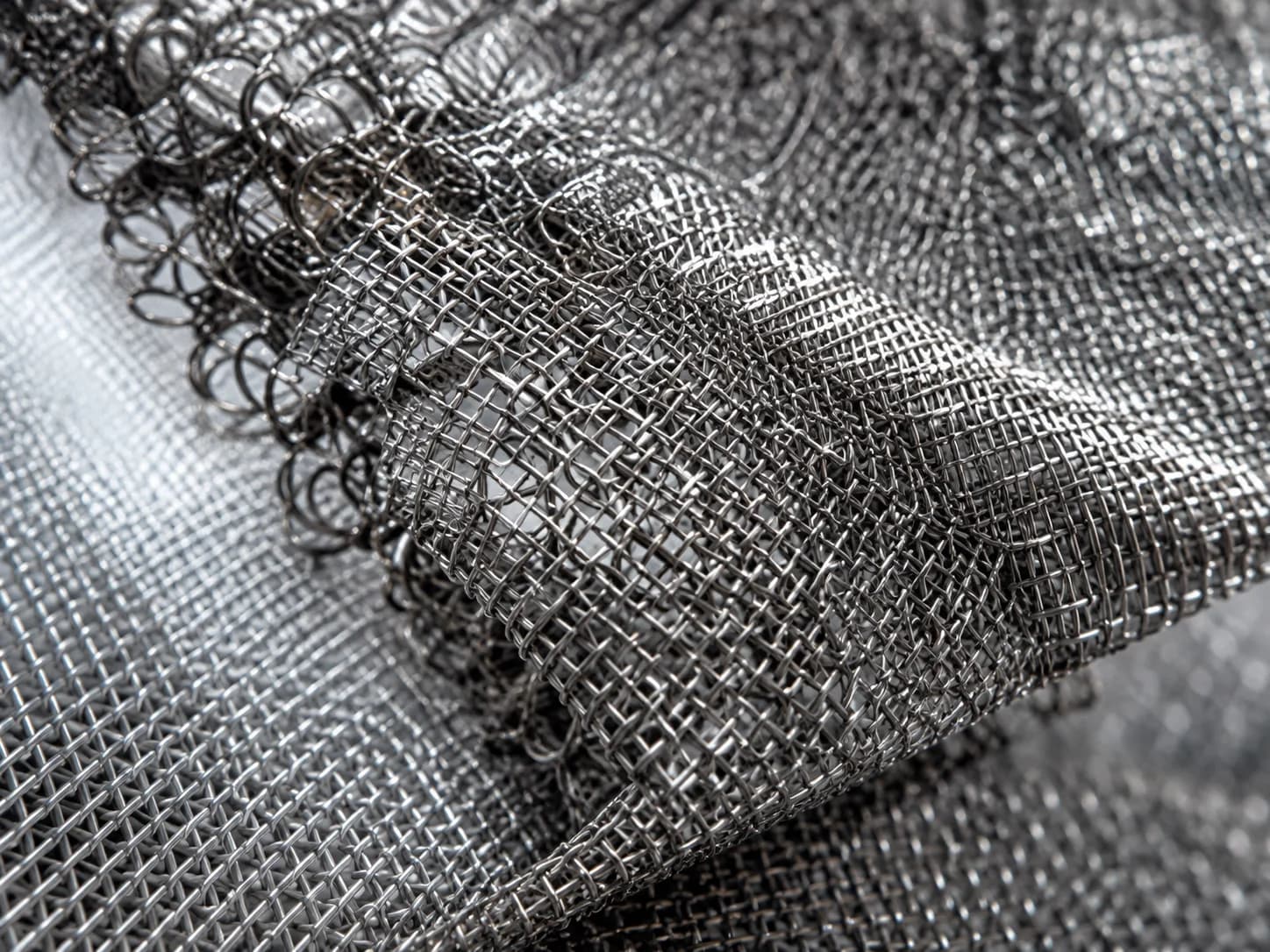
- Control porosity and permeability through wire choice and mesh construction.
- Plan the cleaning cycle so the element works in its low-resistance range.
Verify, do not assume
Calculations get you to a shortlist. A sample tested at the real flow and with the real fluid tells you the pressure drop you will actually see. BVK Hydrotech supports prototyping and engineering optimisation for exactly this step; see R&D, CFD and prototyping and knitted mesh solutions for flow-critical parts.