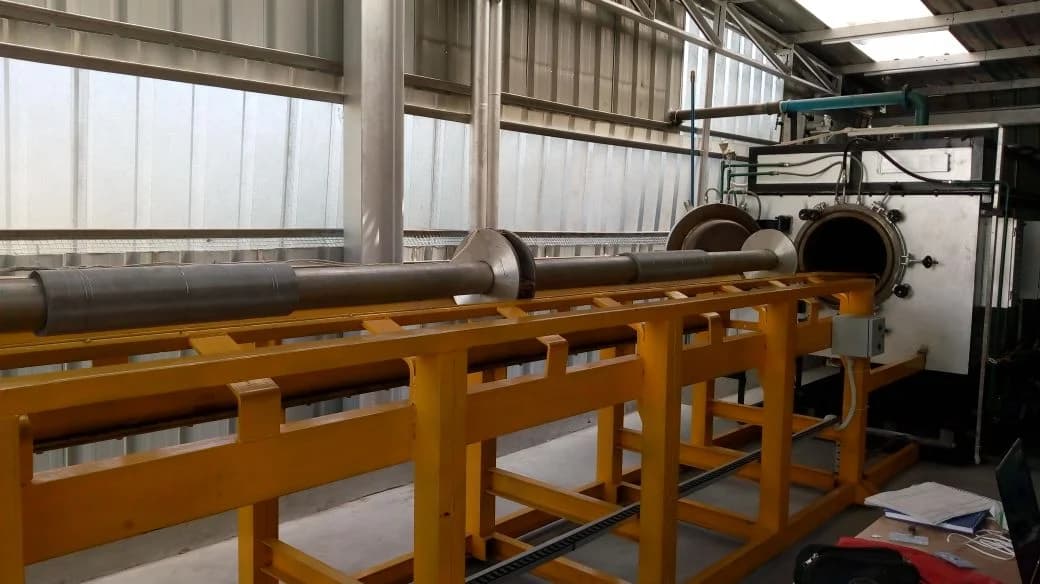
Model Before Making
CFD and simulation can rule an approach out before tooling exists.
Knowledge Center
How mesh decisions are actually made: choosing an alloy, setting geometry, and knowing what to validate before a prototype becomes a production part.
Alloy Selection
Matching metal to chemistry and duty.
Geometry Effects
How aperture and density drive behaviour.
Treatment Impact
Why the same mesh behaves differently.
Validation
What to test before you commit.
Why this page exists
A mesh specified against an incomplete picture of the duty can fail in service however well it is made. A micron rating without a pressure drop budget. An alloy chosen for cost without checking the medium. A knit density set by what was available rather than by the stack. This page collects the reasoning we go through with customers, so that the conversation can start further along.
Six checkpoints — before specifying mesh
Read the NotesEngineering notes
Six points worth settling before a mesh is specified.
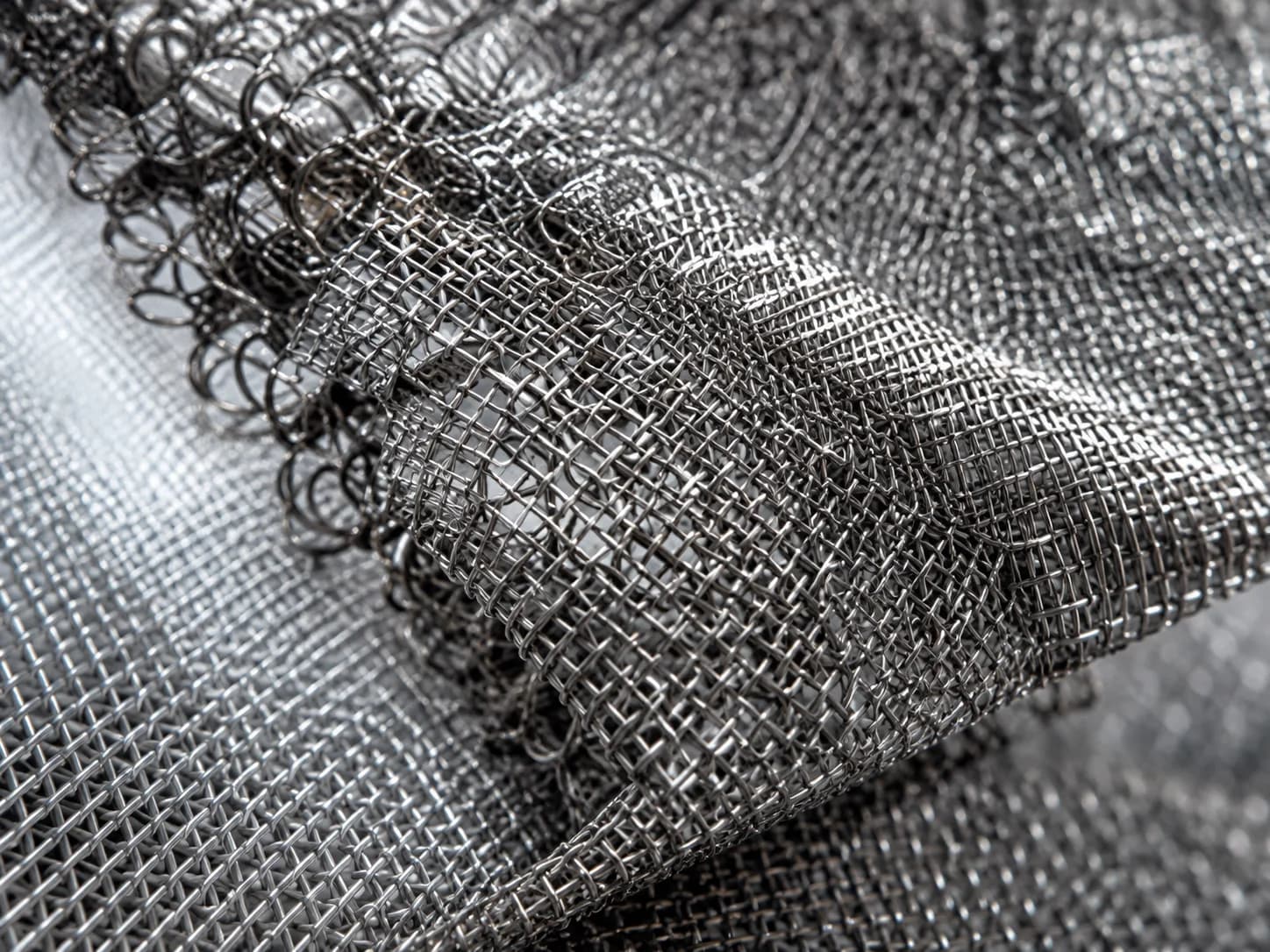
Woven gives a defined, repeatable aperture. Knitted gives porosity and the ability to compress and conform. Choosing wrongly here cannot be fixed by adjusting anything downstream.
Tightening the aperture to improve retention raises pressure drop. State the budget for both and the geometry follows; state only one and the specification is underdetermined.
Annealing, coating and forming alter hardness, formability, contact resistance and surface area. The same woven roll can produce two very different components.
304 is the default, 316 for chlorides, 904L for aggressive acids, nickel for alkaline and conductivity, Hastelloy where stainless will not survive. Starting from price usually costs more.
Across 0.05–0.30 mm, wire diameter sets surface area, stiffness and conductivity at the same time. It is rarely a free variable.
A good prototype proves the geometry works. It does not prove the process is capable. That is what control plans and Production Part Approval are for.
Before you RFQ
An enquiry with these answers gets a technical response quickly. One without them starts with a round of questions.
Our position
Mesh is not the right answer to every separation or conduction problem. Where it is not, saying so early costs us an order and saves you a programme.
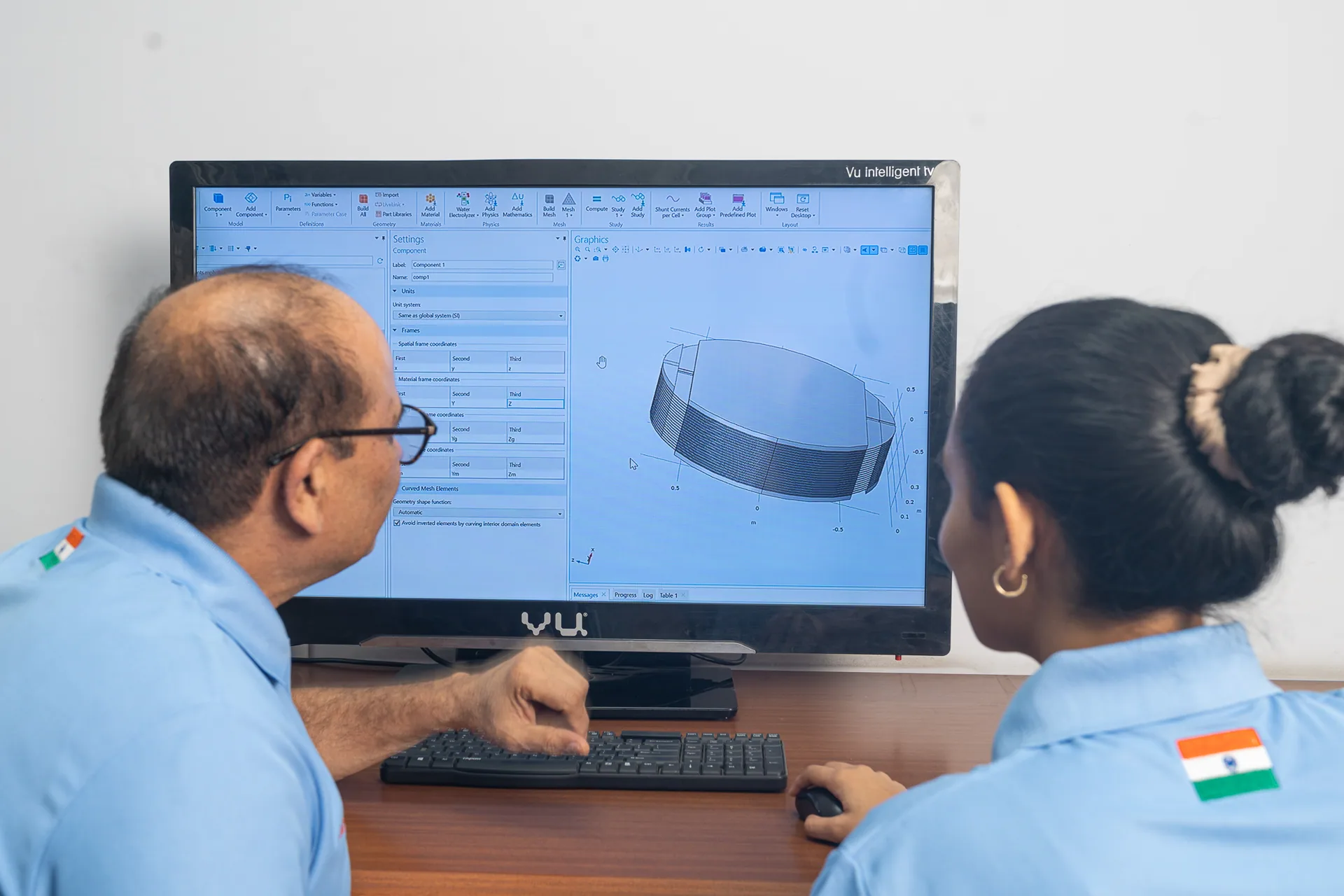
CFD and simulation can rule an approach out before tooling exists.
Filtration is rarely plug-and-play; it needs supplier and customer working together.
Samples tested against norms both sides agreed, not a best-case demonstration.
Where a specification has a boundary, it belongs in the control plan.

Knowledge Center
Our application engineers answer technical questions directly, whether or not there is an order behind them.
Certifications
The same management systems and compliance badges audited across every order: quality, environment, safety, energy and material conformity.
AS9100

CE Marking

DSIR Recognized R&D Centre
IATF 16949:2016
ISO 9001:2015
ISO 14001:2015

ISO 45001:2018
ISO 50001:2018

REACH Compliant

RoHS Compliant
AS9100
CE Marking
DSIR Recognized R&D Centre
IATF 16949:2016
ISO 9001:2015
ISO 14001:2015
ISO 45001:2018
ISO 50001:2018
REACH Compliant
RoHS Compliant
FAQ
Answers to the questions buyers and engineers ask most often about this part of our range.
B2B technical enquiry
Tell us about your application and our engineers will get back to you.