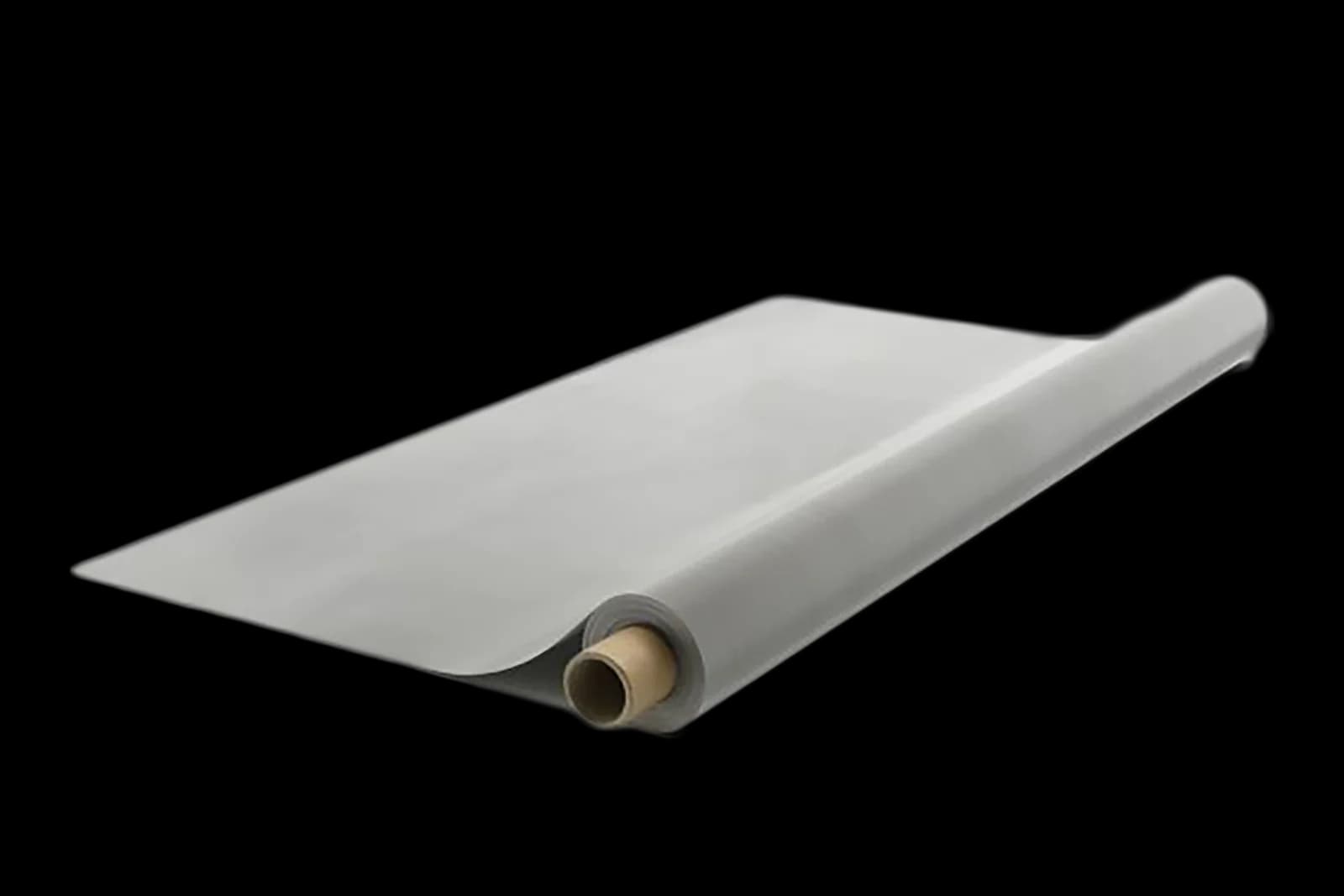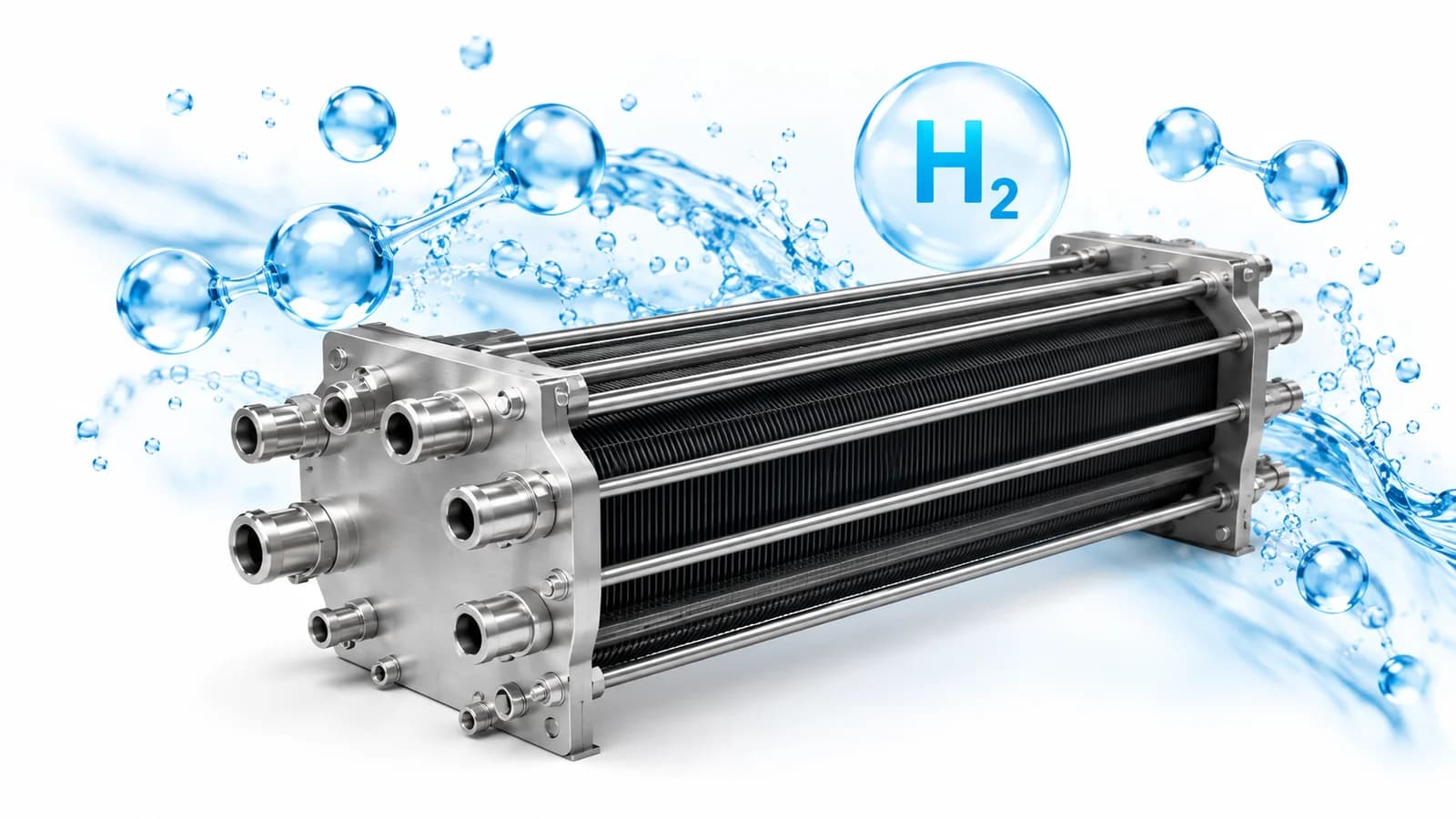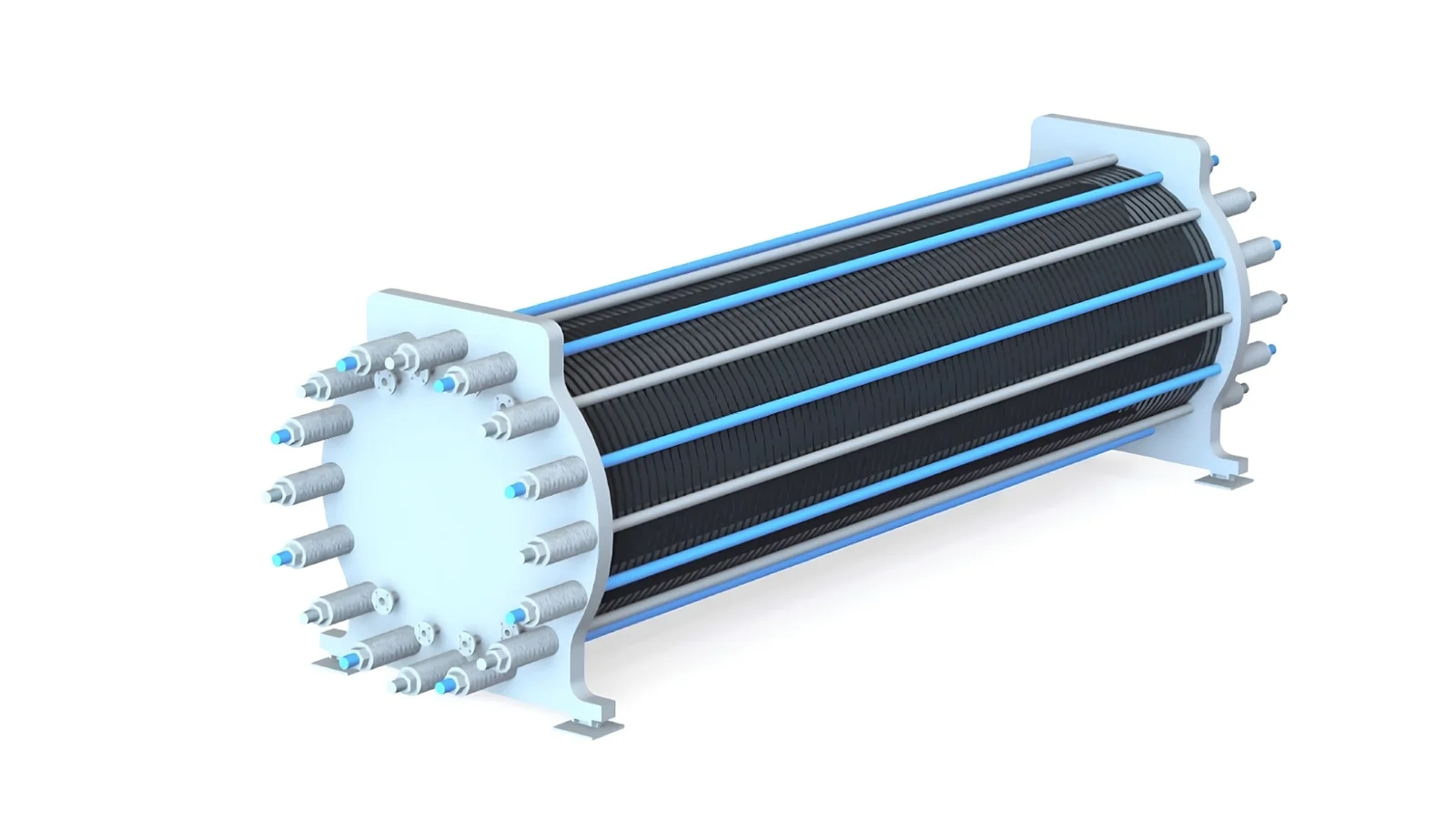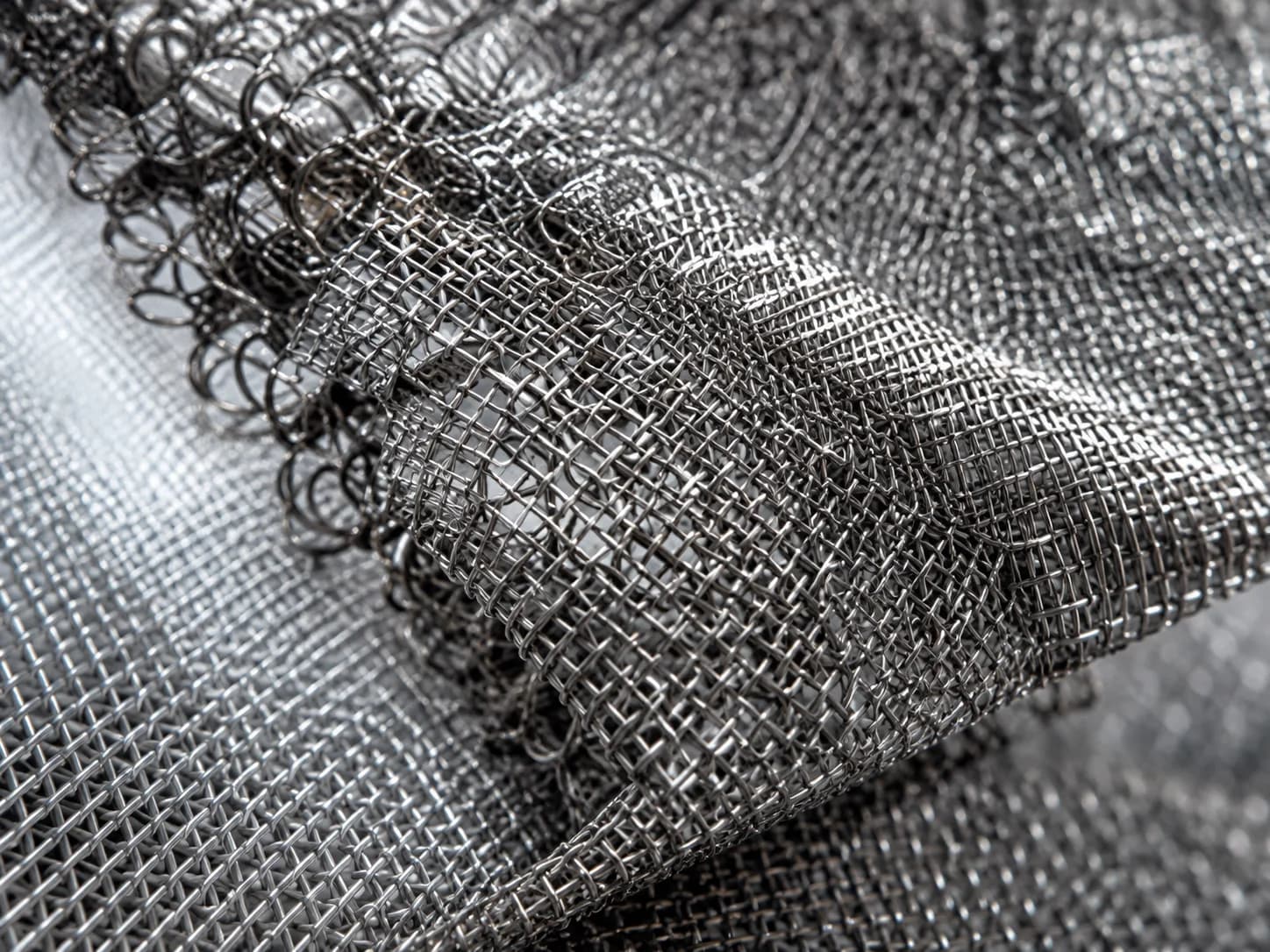

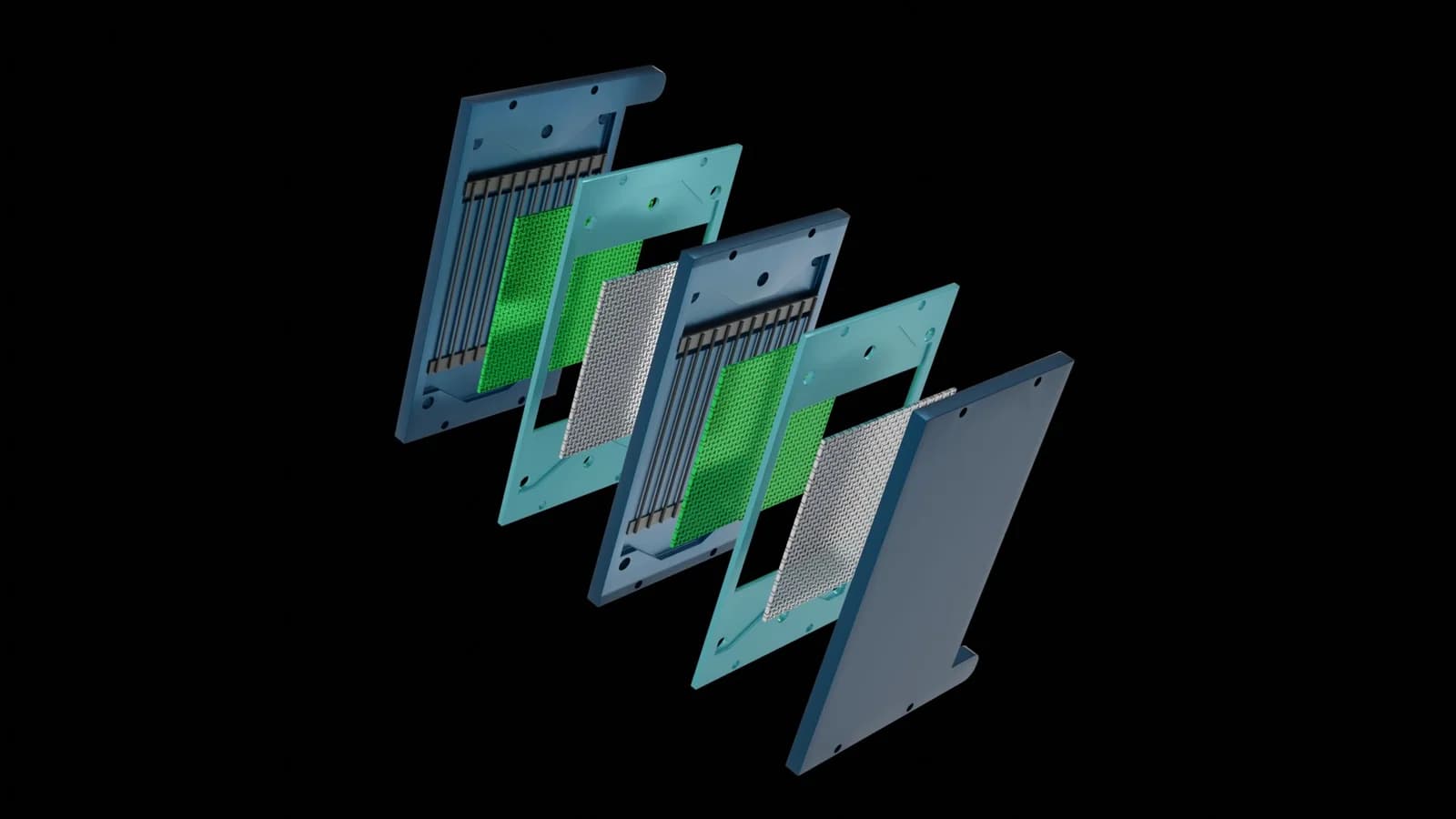
Fuel cells convert hydrogen back into electricity, and every cell needs gas to reach the catalyst, current to leave the cell and a structure to hold it all together. Metal mesh is used to do each of those jobs.
The three jobs
- Gas diffusion. A porous layer spreads reactant gas evenly over the electrode and lets product water or gas leave.
- Current collection. A conductive path carries current from the electrode to the plate.
- Electrode support. A robust substrate holds the catalyst layer and the membrane assembly in place.
How the design changes by cell type
| Cell type | Typical environment | Mesh considerations |
|---|---|---|
| AFC (alkaline) | Alkaline electrolyte | Nickel-based mesh for caustic compatibility |
| PEM | Acidic, humid, moderate temperature | Corrosion-resistant materials such as titanium, with careful surface condition |
| SOFC | High temperature, oxidising | High-temperature alloys that keep conductivity and strength |
The parameters that matter
- Permeability and porosity: set gas distribution and water handling.
- Conductivity and contact: low resistance across the stack.
- Mechanical strength and springback: keeps contact under clamping load and thermal cycling.
- Surface condition and cleanliness: contamination hurts catalyst performance.
- Dimensional consistency: every cell in a stack must behave alike.
Why mesh instead of other media
Metal mesh gives designers tight control of porosity, a consistent structure and compatibility with demanding chemistries and temperatures. It can be cut, formed and treated to the exact geometry of the cell.
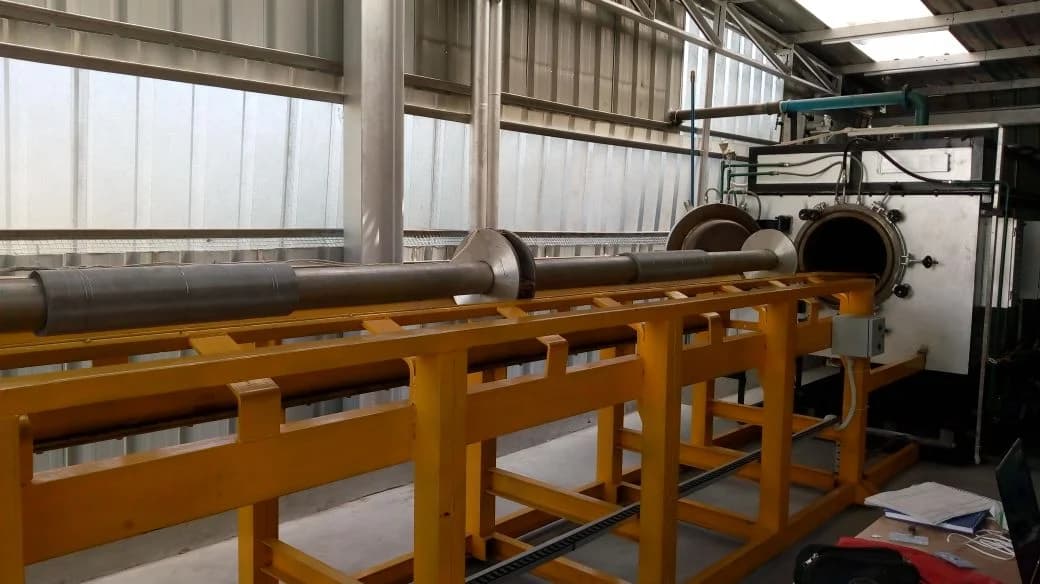
BVK Hydrotech engineers woven and knitted mesh for gas diffusion, current collection and electrode support in AFC, PEM and SOFC stacks. See fuel cell solutions for the details, and our R&D and CFD prototyping capability for early design work.